
"climate coffee disease"
3000 article(s) found

Coffee Storm-will coffee disappear from the world in the future?
Professional coffee knowledge exchange more coffee bean information Please pay attention to the coffee workshop (Wechat official account cafe_style) Climate change has affected the growth of coffee, especially the more sensitive Arabica beans are more sensitive to temperature, the increase in temperature will easily cause insect pests and leaf rust

Special Topics on Bourbon variants | introduction by Pacamara, Kaddura, Kaduai and Sachimo
In the process of coffee growth, there are many challenges, such as moisture, frost, diseases and insect pests, among which leaf rust is the most harmful. Natural things evolve under natural selection, and so do coffee trees. there are many varieties of coffee in the coffee world, either naturally mutated or artificially cultivated. We wrote an introduction to bourbon species before, and this time we

Is Timor coffee a spontaneous hybrid? Is Timor coffee all uncertified organic?
Timor is a small island located in the southern part of the Southeast Asian Ocean. It is unique in that it is divided between the sovereign State of East Timor in the east and Indonesia in the west. Australia is less than 500 kilometres from Timor, separated by the Timor Sea. In East Timor, in the east, the coffee industry is booming. Today, Front Street Coffee will explore who produces Timor Coffee and how it is

Yunnan Tieka Coffee Bean Flavor description Taste Grinding scale Manor
With the exception of Ethiopia, the origin of Arabica, the mutants or mixed-race varieties cultivated or found in Central and South America, India and East Africa are mainly Tibica and bourbon, and the genetic complexity is far lower than that of Ethiopia. this is the main reason for the weak physique and poor disease resistance of Arabica outside Ethiopia. In addition, the most common thing between bourbon and Tibica is that there must be shade trees.

Honduras New Deal Cuts Coffee Production Size
Specialty coffee is also known as specialty coffee. It refers to coffee made from green beans with excellent taste characteristics grown in a few extremely ideal geographical environments. Depending on the particular soil and climatic conditions in which they are grown, they have outstanding flavors. This type of coffee is carefully selected and graded for its hard texture, rich taste and wind.

What does climate change mean for the future of coffee? the hope of coffee F1 hybrid cars
Stamaya. Central America. H1 . These are the names that those who take coffee seriously should know, because mixed varieties may be the coffee of the future. Although there are a large number of special coffee beans today-the familiar coffee includes Allah from Ethiopia, Colombia, Guatemala and other places.

What Arabica coffee beans does Starbucks use? How is it different from Robusta?
Professional coffee knowledge exchange more coffee bean information please follow the coffee workshop (Wechat official account cafe_style) what are Coffee Arabica coffee beans? How is it different from Coffee Robusta? There are many varieties of coffee trees, among which Arabica and Robusta are the main ones that can be used for drinking and circulating on the market.

Introduction to the characteristics of Iron pickup Coffee beans description of taste and flavor of iron pickup coffee varieties
Of the more than 40 species of coffee plants in the world, only three have become commercial coffee, one is Arabica, one is Robusta, and the other is Liberia. The coffee that people usually drink is mainly Arabica and Robusta, and Arabica is the most important kind of fine coffee. Low latitude and high altitude

A brief introduction to the cultivation of Bolivian boutique coffee beans with balanced taste, geographical location, climate and altitude
The early Bolivian coffee was of low quality and the market was very poor. Usually the picked coffee fruit is bumped all the way to the processing plant after a simple peeling treatment. Due to the imperfect infrastructure, the traffic is underdeveloped. Coffee farmers have to overcome the rugged mountain road and transport the beans to the higher altitude area of La Paz for washing. If the coffee fruit can not be delivered to the processing in time
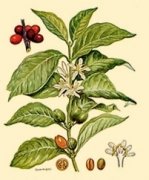
A brief introduction to the basic knowledge of Coffee beans
There are about 60 species of coffee in the world, of which only 25 species are cultivated to make coffee, of which only 4 species are used as commercial coffee: large fruit coffee (Coffea liberica), medium fruit coffee (Coffea canephora), small fruit coffee (Coffea arabica) and high yield coffee (Coffea dewevrei). These are botanical names. Coffee in the world at present

Colombia coffee varieties castillo coffee beans where castillo coffee is good to drink
Due to the importance of coffee crops to Colombia's economy, Colombia invests far more in scientific coffee research than many coffee-producing countries. Colombia's National Coffee Survey Center (Cenicafe), run by the National Coffee Growers Federation (FNC), is the world's largest coffee producer.

Classification of Coffee beans Coffee Origin Coffee Coffee practice
Arabica was the only kind of coffee beans, then in the 19th century, there was a large area of diseases and insect pests, coffee growers began to look for other varieties of coffee resistant to diseases and insect pests, so Rob's special was discovered and began to be planted artificially. Robert's special growth in low-altitude areas, characterized by resistance to diseases and insect pests, cold, drought resistance, a word description, thick, but the taste is relatively comparative

Coffee species introduction Coffee Tree introduction Coffee planting method
Arabica was the only kind of coffee beans, then in the 19th century, there was a large area of diseases and insect pests, coffee growers began to look for other varieties of coffee resistant to diseases and insect pests, so Rob's special was discovered and began to be planted artificially. Robert's special growth in low-altitude areas, characterized by resistance to diseases and insect pests, cold, drought resistance, a word description, thick, but the taste is relatively comparative

Coffee in the cup depends on climate, pests and plant science.
Photo Source: Baidu Pictures A recent report on the impact of climate change on crop cultivation mentioned that the coffee crisis is already brewing, especially the highly praised Arabica coffee beans. A study published in PLOS One in April mainly simulated coffee cultivation in 21 different climatic conditions up to 2050, covering 60 tropical countries on both sides of the equator.
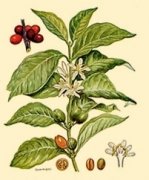
Basic knowledge of boutique coffee knowledge of fine coffee beans
There are about 60 species of coffee in the world, of which only 25 species are cultivated to make coffee, of which only 4 species are used as commercial coffee: large fruit coffee (Coffea liberica), medium fruit coffee (Coffea canephora), small fruit coffee (Coffea arabica) and high yield coffee (Coffea dewevrei). These are botanical names. Coffee in the world at present

Introduction to the varieties of Columbia Jindio Coffee beans produced by Grinding scale Flavor and Taste treatment
Grinding scale Flavor and Taste treatment of Colombian Jindio Coffee beans the suitable climate in Colombia provides a real natural pasture for coffee. Coffee trees in Colombia are mainly cultivated in the Andes, on steep slopes about 1300 meters above sea level, where the annual temperature is about 18 degrees Celsius and the annual rainfall is 2000 to 3000 millimeters.

Coffee is divided into three original systems. What coffee beans do Starbucks use? Arabic coffee?
Arabica coffee began to be used by Yemenis in southwestern Arabia as early as 575 AD, Western Europe began to drink it around 1615, and coffee was popular in Europe in the early 17th century. Coffee in the world is mainly grown in America, Africa and Asia.
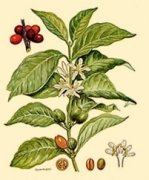
There are about 60 species of coffee plants in the world.
There are about 60 species of coffee in the world, of which only 25 species are cultivated to make coffee, of which only 4 species are used as commercial coffee: large fruit coffee (Coffea liberica), medium fruit coffee (Coffea canephora), small fruit coffee (Coffea arabica) and high yield coffee (Coffea dewevrei). These are botanical names. Coffee in the world at present

Introduction to the variety of Katim coffee beans suitable for which baking degree and flavor description method
What kind of baking degree is suitable for katim coffee beans? Typica: the oldest native variety in Ethiopia and southeastern Sudan, all Arabica are derived from Tibica. The flavor is elegant, but the physique is weak, the disease resistance is poor, the fruit yield is less. Jamaica Blue Mountain, Sumatra Manning, Hawaii Kona, etc.